
Typing “plastic surgery near me” into a search bar takes about two seconds. Figuring out what to do with the results is the part that actually matters. Dozens of surgeons might show up within a few miles of any given address, and proximity alone tells you almost nothing about who’s actually qualified to operate on you.
As an occupational therapy practice in Parsippany, New Jersey that works with patients before and after cosmetic procedures, we’ve seen firsthand how much the surgeon someone chooses shapes their entire experience — from the first consultation through the final results. Here’s exactly what to check before you book one.
Quick answer: Before booking a consultation, confirm these five things:
- The surgeon is board certified — ideally by the American Board of Plastic Surgery (ABPS) or American Board of Facial Plastic and Reconstructive Surgery (ABFPRS)
- They’ve completed at least 5 years of surgical training, including 2+ years focused specifically on plastic surgery
- Their procedure will take place in an accredited surgical facility
- They have no history of malpractice claims
- Past patients — not just star ratings — can speak to their actual results
Where to Start Looking
The best referrals rarely come from page one of a search engine. Try these sources first:
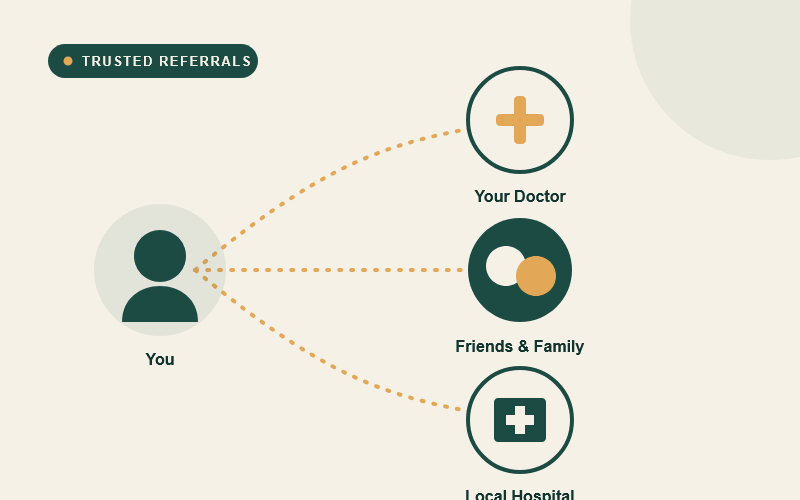
- Your primary care doctor. Ask which surgeons they’ve referred patients to, and how those patients did afterward.
- Friends or family. Especially anyone who’s had the exact procedure you’re considering — firsthand experience is hard to beat.
- A reputable local hospital. Call and ask which plastic surgeons hold privileges there. Hospitals vet their affiliated surgeons closely, which filters out a lot of risk before you even start.
- Patient review sites. Look past the star rating and read the actual testimonials for details about training, communication, and results.
- Certification Matters. The American Board of Medical Specialties’ free public tool for confirming a doctor’s board certification — you can also call 1-866-ASK-ABMS.
Need a recommendation in Morris County?
If you’re weighing your options and want a referral to a qualified, board-certified plastic surgeon for the specific procedure you’re considering — whether that’s a facelift, tummy tuck, or breast surgery — feel free to reach out to our team. We work with plastic surgery patients throughout their recovery and are happy to point you toward surgeons we trust.
Why Board Certification Should Be Non-Negotiable
Board certification is the clearest sign that a surgeon has met a rigorous, independently verified standard — not just for skill, but for keeping that skill current. In the U.S., certification comes through one of a handful of specialty boards recognized by the American Board of Medical Specialties (ABMS), a nonprofit that’s overseen physician certification standards since the 1930s.
For plastic surgery specifically, a few boards matter most:
- American Board of Plastic Surgery (ABPS) — the most comprehensive certification, covering breast, body, facial, and reconstructive procedures such as tummy tucks, breast augmentation, and facelifts. It also carries the strictest training requirements of the group.
- American Board of Facial Plastic and Reconstructive Surgery (ABFPRS) — focused specifically on the face, head, and neck, including procedures like rhinoplasty and facelifts.
- American Board of Otolaryngology (ABO) — covers ear, nose, and throat (ENT) surgery along with head and neck procedures.
Not every “board certified” claim is equal. The certifying board should actually match the procedure you’re getting.
What Real Surgical Experience Looks Like
Certification is the floor, not the whole picture. Beyond the credential itself, look for:
- At least five years of total surgical training, including a minimum of two years focused specifically on plastic surgery
- Direct experience with your specific procedure category — breast, body, facial, and reconstructive work each call for different expertise
- A record of ongoing continuing education, including updates on safety standards and new techniques
- Adherence to a formal code of ethics set by their certifying board
- No history of malpractice claims, which you can typically verify through your state’s medical board
A surgeon can check every box on paper and still not be the right fit for your specific goals — which is exactly why the referral step above matters so much.
Decoding the Letters After Their Name
You’ll usually see a few extra letters trailing a surgeon’s name, and each one means something different:
- MD (Doctor of Medicine) — four years of medical school built around conventional diagnosis and treatment, followed by years of residency training in their specialty.
- DO (Doctor of Osteopathic Medicine) — equivalent four-year training, with added emphasis on hands-on, whole-body care, including the musculoskeletal system. DOs are licensed the same way MDs are and can pursue the same surgical specialties.
- FACS (Fellow of the American College of Surgeons) — an additional credential, not a requirement, showing a surgeon’s training, skill, and ethical standing have been independently reviewed by the College of Surgeons.
None of these letters replace board certification. Think of them as helpful context, not a substitute.
Why the Surgical Facility Matters as Much as the Surgeon
An excellent surgeon operating out of a poorly equipped facility is still a risk. Look specifically for accredited surgical facilities — accreditation means a facility has met strict, independently verified standards for equipment, safety protocols, and staff qualifications.
Accredited outpatient surgical facilities typically report:
- Serious complication rates under 1%
- Mortality rates below 1 in 57,000 procedures
- Round-the-clock monitoring from at least two licensed staff members
- A written emergency response plan, ready if something goes wrong
- On-site equipment and medication to manage complications immediately
- Staff certified in Advanced Cardiac Life Support (ACLS)
Before booking anything, it’s worth simply asking: “Is this facility accredited, and by which organization?” A confident, specific answer is a good sign.
Frequently Asked Questions
What is the most important thing to look for in a plastic surgeon? Board certification from a recognized specialty board — most commonly the American Board of Plastic Surgery — is the single biggest factor, followed closely by the surgeon’s direct experience with your specific procedure.
How do I confirm a plastic surgeon is actually board certified? Use Certification Matters, the ABMS’s free public verification tool, or call 1-866-ASK-ABMS. You can also ask the surgeon’s office directly — a legitimate practice won’t hesitate to provide this.
Is a “board-certified plastic surgeon” the same as a “board-certified cosmetic surgeon”? Not necessarily. “Cosmetic surgeon” isn’t a protected title in the same way “plastic surgeon” is. Always ask exactly which board certified them, and confirm that board is recognized by the ABMS.
Do I need lymphatic drainage therapy after plastic surgery? Many surgeons recommend it as part of recovery from procedures like liposuction, tummy tucks, or facelifts, since it can help support your body’s natural swelling reduction. It’s worth discussing with your surgeon and considering time with a Certified Cosmetic Surgery Therapist as part of your recovery plan — our Post Plastic Surgery Healing guide covers more on what to expect.
How do I find a qualified plastic surgeon near me in Morris County, NJ? Start with referrals from your primary doctor, friends who’ve had similar procedures, and local hospitals, then confirm certification through Certification Matters. If you’d like a personal recommendation based on your specific procedure, our Morris County team is happy to help.
Ready to Take the Next Step?
Choosing the right plastic surgeon is one of the biggest decisions in your entire cosmetic surgery journey, and it’s worth taking the time to get right. If you’re in the Morris County area and would like a recommendation for a qualified, board-certified surgeon based on the specific procedure you’re considering, our team at Advance Rehabilitation Services in Parsippany, New Jersey is happy to point you in the right direction.
And once your procedure is scheduled, don’t overlook what happens after: working with our Certified Cosmetic Surgery Therapist, Maria Duran, CCST, on post-surgical lymphatic drainage therapy can play a real role in reducing swelling, easing discomfort, and helping you get the most out of your results.
Contact Advance Rehabilitation Services today for a surgeon recommendation, or to schedule a consultation for post-surgical lymphatic care.
**This article is for general informational purposes and isn’t a substitute for personalized medical advice from your surgeon or care team.