
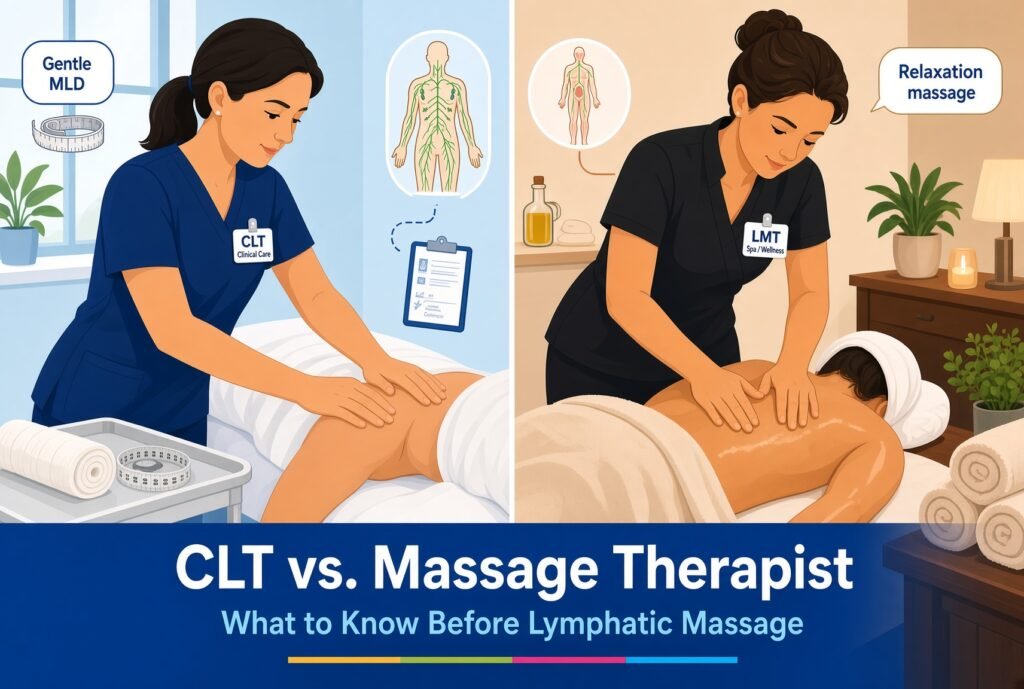
If you’ve been searching for lymphatic drainage or lymphedema treatment near you, you’ve probably noticed two very different kinds of providers show up in the results: massage studios offering “lymphatic drainage massage,” and clinics offering care from a Certified Lymphedema Therapist (CLT). The listings can look nearly identical — but the training behind them is not.
At Advance Rehabilitation Services in Parsippany, New Jersey, we meet patients every week who didn’t realize there was a difference until after a disappointing, or even unsafe, massage experience. This guide breaks down — in plain, everyday language — what actually separates a Certified Lymphedema Therapist from a Licensed Massage Therapist, and why that difference matters for your health, not just your comfort.
What Is Lymphedema, and Why Does It Need Specialized Care?
Lymphedema is chronic swelling that happens when your lymphatic system can’t drain fluid the way it’s supposed to. It’s far more common than most people realize.
Lymphedema often develops after cancer treatment, surgery, an injury, or an infection, but it can also appear with no obvious trigger at all. Either way, it’s a genuine medical condition — not just “puffiness” — and treating it takes more than a relaxing massage. It takes someone trained to recognize what’s actually happening beneath the skin. That’s exactly where a Certified Lymphedema Therapist comes in.
Massage Therapist vs. Certified Lymphedema Therapist: What’s the Real Difference?
Both are legitimate, respected professions, and the confusion is understandable — their names sound similar, and you’ll see “lymphatic drainage” advertised at day spas and medical clinics alike. But the training behind each title is very different.
Licensed Massage Therapist (LMT)
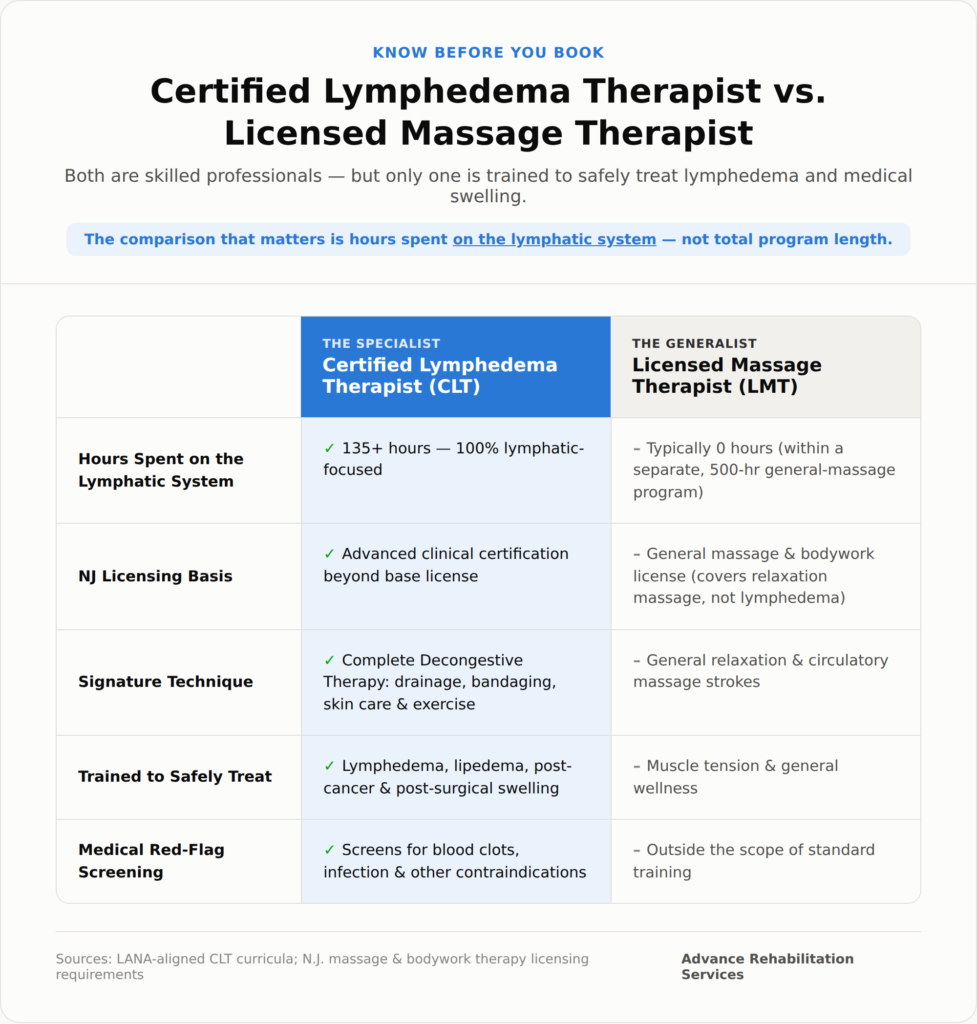
In New Jersey, becoming a Licensed Massage & Bodywork Therapist requires a minimum of 500 hours of training. That’s a real, substantial program — but it’s a general one, covering anatomy, relaxation technique, and therapeutic massage. Typically none of those 500 hours are required to focus specifically on the lymphatic system. In fact, many massage training programs are explicit that treating lymphedema falls outside their scope and should be referred to a specialist.
Certified Lymphedema Therapist (CLT)
A Certified Lymphedema Therapist completes 135+ additional hours where, unlike the general massage curriculum above, every single hour is about the lymphatic system — its anatomy, physiology, and Complete Decongestive Therapy (CDT), the medically recognized gold-standard treatment for lymphedema, combining manual lymphatic drainage with compression bandaging, skin care, and targeted exercise. A CLT is also trained to screen for medical red flags — like an unaddressed blood clot or active infection — before ever beginning treatment.
Why a Certified Lymphedema Therapist Is the Safer Choice
If you’re dealing with true lymphedema, lipedema, or swelling related to cancer treatment or surgery, here’s why working with a CLT matters:
- Safety first. A CLT is trained to recognize when swelling shouldn’t be massaged at all — for example, in the presence of an active infection or an unscreened blood clot.
- The right technique. Manual Lymphatic Drainage uses a specific, light, rhythmic pressure designed to move fluid through undamaged pathways — very different from standard massage strokes.
- A complete plan, not just a session. Complete Decongestive Therapy often includes compression garments or bandaging and a home routine, not just hands-on time in the office.
- Documentation your doctor can use. A CLT’s notes and treatment plan can support communication with your physician or surgeon.
- A possible path to insurance coverage. Because CLT services are delivered within a medical framework, they’re often billable as a covered therapy service — something a spa-based massage typically is not. (Always confirm your specific benefits with your insurer.)
Signs You May Benefit From Seeing a Certified Lymphedema Therapist
Not sure whether your swelling is something worth having looked at? These are the signs we hear most often from new patients:
- Swelling in an arm, leg, hand, or foot that doesn’t go down overnight
- A history of cancer treatment involving lymph node removal or radiation
- Lingering swelling weeks after a surgery or cosmetic procedure
- Skin that feels tight, heavy, or has changed texture over a limb or joint
- Repeated infections (cellulitis) in the same arm or leg
- Pressing on the swollen area leaves a temporary dent (“pitting”)
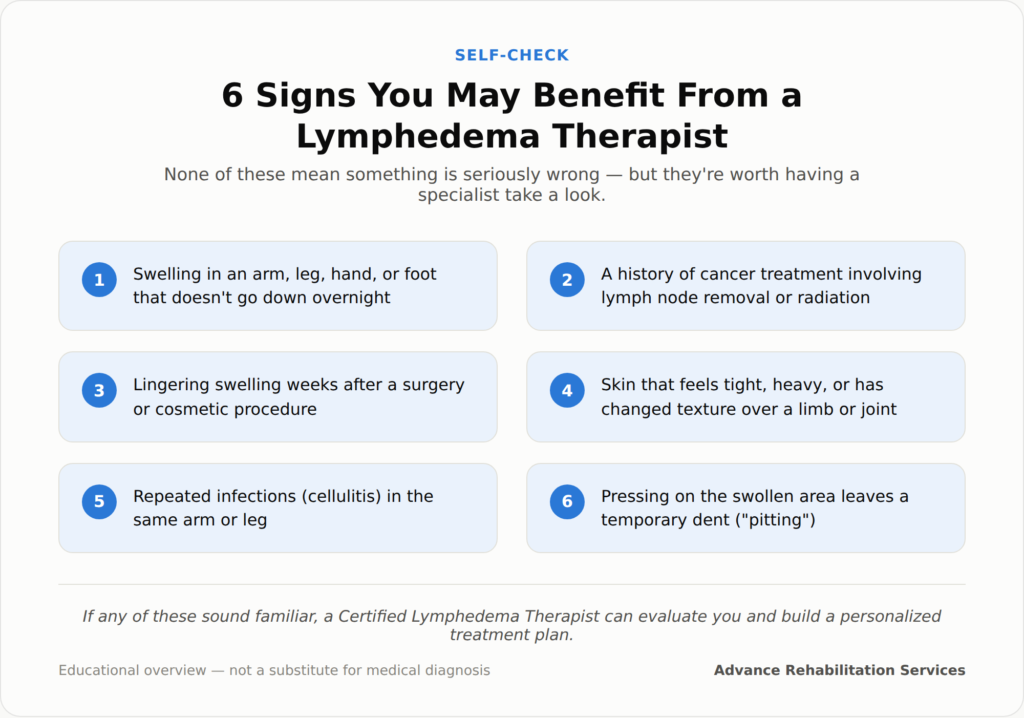
If even one or two of these sound familiar, it’s worth a conversation — lymphedema generally responds far better to treatment the earlier it’s addressed.
FAQ Place Holder
Recovering From Cosmetic Surgery? Certified Lymphatic Therapy Matters for Your Results
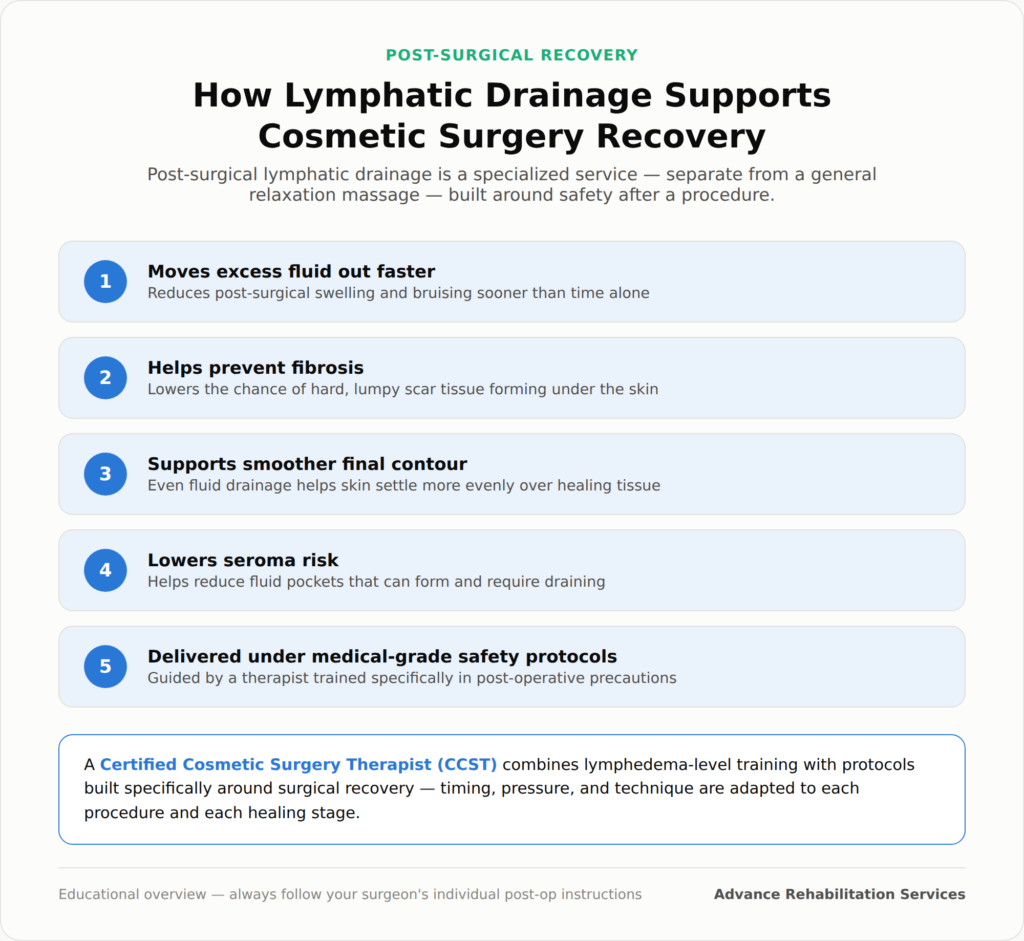
Lymphatic drainage isn’t only for medical lymphedema — it’s also one of the most valuable, and most overlooked, parts of recovering well from cosmetic surgery. Procedures like liposuction, a tummy tuck, a mommy makeover, or a breast augmentation all disrupt the tissue your lymphatic system relies on to drain fluid — which is exactly why swelling, firmness, and uneven contour are so common in the weeks after surgery.
***This is where a Certified Cosmetic Surgery Therapist (CCST) comes in — a therapist who builds on lymphedema-level training with techniques designed specifically around post-surgical healing stages. The goal isn’t relaxation; it’s helping your body clear fluid efficiently, reduce the risk of firm scar tissue (fibrosis), and support the smooth, even result you and your surgeon were working toward in the first place.***
Schedule Your Lymphatic Therapy Consultation Today
Whether you’re managing lymphedema, recovering from surgery, or simply want an honest, credentialed second opinion on a “lymphatic massage” you’ve seen advertised nearby, it’s worth working with someone trained specifically for it.
Advance Rehabilitation Services is led by Maria Duran, OT — a Licensed Occupational Therapist, Certified Lymphedema Therapist (CLT), and Certified Cosmetic Surgery Therapist (CCST) with more than 20 years of clinical experience.
And if you’re preparing for cosmetic surgery, don’t overlook this part of your recovery plan: the right certified cosmetic surgery lymphatic therapy can make a real difference in how comfortably you heal and how closely your final results match what you and your surgeon envisioned.
Contact Us to Schedule Your ConsultationFrequently Asked Questions About Certified Lymphedema Therapists
Is a Certified Lymphedema Therapist the same as a massage therapist?
Not exactly. A Certified Lymphedema Therapist (CLT) is a separate credential built on top of a base license — often as an occupational therapist (in our case), physical therapist, nurse, or yes, sometimes a massage therapist. The CLT training itself is additional, specialized education focused entirely on the lymphatic system, layered on top of whatever license the person already holds.
Will insurance cover treatment from a Certified Lymphedema Therapist?
Often, yes, when it’s provided as part of a medical treatment plan by a licensed clinician such as an occupational or physical therapist — for example, after cancer treatment or surgery. Coverage varies by plan, so it’s always worth verifying your specific benefits before your first visit.
How can I tell if a provider is really a Certified Lymphedema Therapist?
Simply ask. A legitimate CLT will be glad to tell you which certification program they completed and confirm their credential is active. You can also ask whether they practice Complete Decongestive Therapy (CDT), which is the recognized standard of care for lymphedema.
How many manual lymphatic drainage sessions will I need?
It depends on the cause and severity of your swelling. Some people notice a real difference after just a few visits, while chronic lymphedema is typically managed with a more intensive initial phase followed by a long-term self-care routine your therapist teaches you.
Can a massage therapist safely treat swelling from cancer treatment or surgery?
Generally, no. Without additional lymphedema-specific training, most massage programs teach that this kind of swelling should be referred out rather than treated directly, since the wrong pressure or technique on compromised lymphatic pathways can potentially make things worse. This is precisely the situation a Certified Lymphedema Therapist is trained to manage safely.
***This article is for general educational purposes and is not a substitute for individualized medical advice. Please consult your physician or a qualified therapist about your specific condition.***